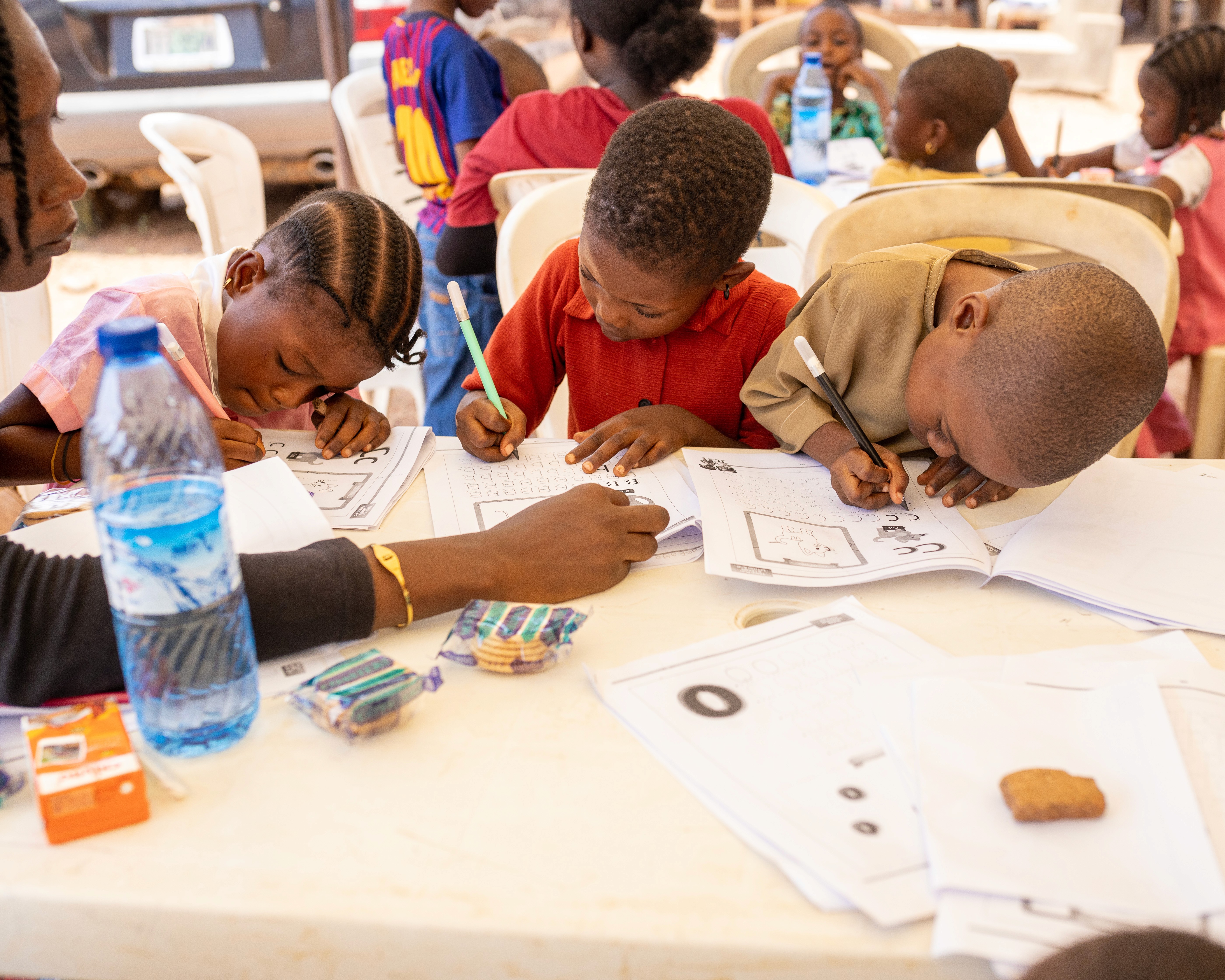
Too many children are ready to learn, but don’t have what they need to start. We see it in children who struggle to recognize letters or numbers — not because they can’t, but because they haven’t had the right exposure or tools. So we step in early, combining guided learning with simple, practical materials children can use again and again. Because access alone isn’t enough, and teaching alone isn’t enough — both have to work together.
LSBD addresses critical barriers to child development, learning, and well-being in low-resource communities. Our approach integrates education, health, nutrition, and caregiver support, ensuring that children have the foundation to thrive academically, socially, and emotionally.
Through community-based outreach, hands-on learning, and resource provision, LSBD tackles four interconnected global issues:
1. Health & Nutrition
The Challenge
Poor health and inadequate nutrition are major obstacles to learning and development. Globally, millions of children experience:
Stunting and malnutrition that limit cognitive and physical growth.
Micronutrient deficiencies, impacting memory, attention, and school performance.
Preventable illnesses that cause absenteeism and long-term learning gaps.
In many low-resource communities, families lack access to affordable nutritious food, safe water, and basic health guidance, which can perpetuate cycles of poor education and health outcomes.
LSBD’s Approach
We integrate health and nutrition education into every child-focused intervention.
Key strategies:
Caregiver Engagement: Short, practical sessions on hygiene, illness prevention, and affordable nutrition.
Interactive Learning: Demonstrations and real-life examples, linking nutrition and health directly to learning readiness.
Practical Takeaways: Caregivers receive guidance to implement routines at home, such as balanced diets and handwashing practices.
Follow-Up: Reinforcement via calls, visits, or group sessions to ensure adoption of practices.
Impact: Koiwo Case Study
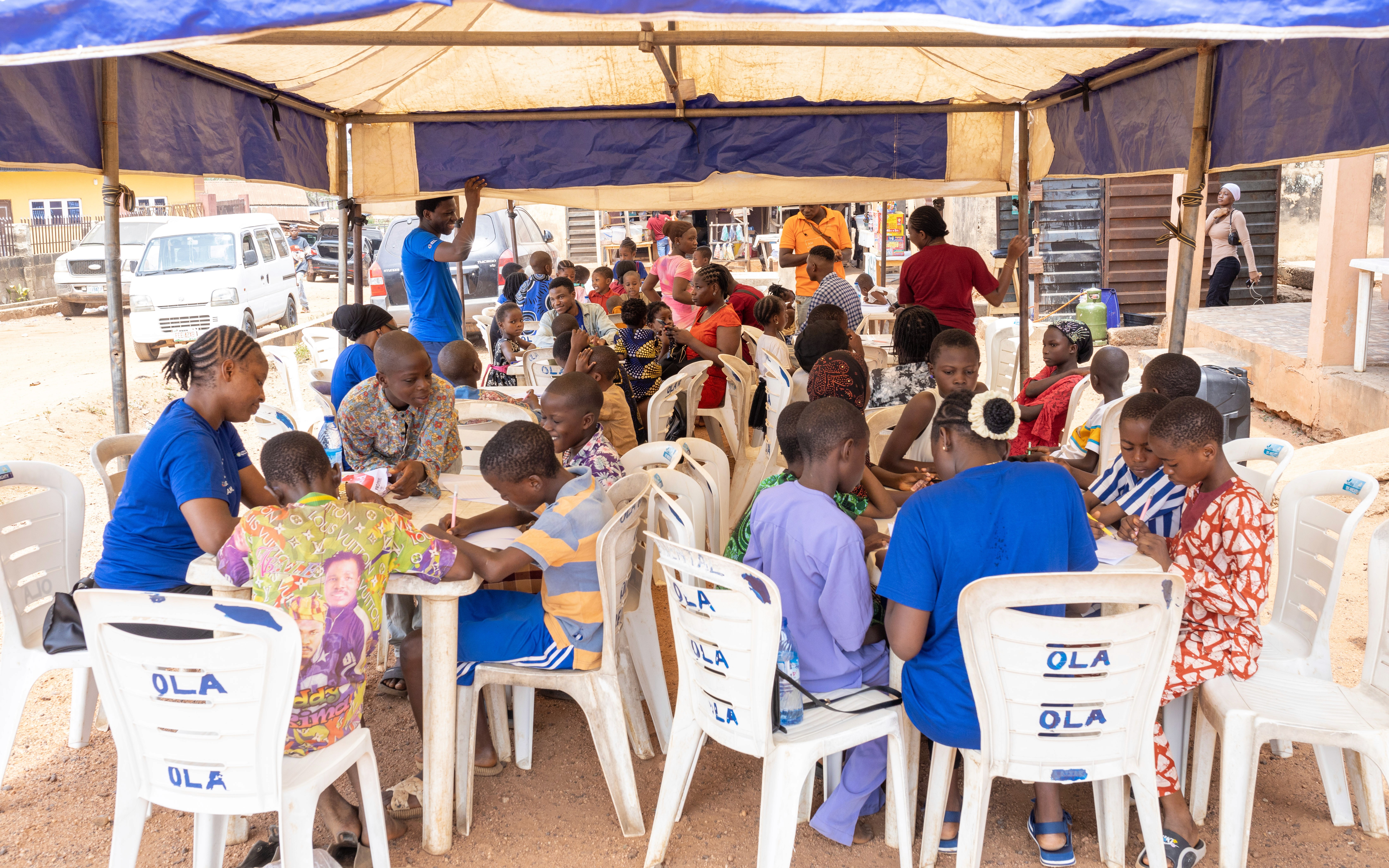
Participants: 14 caregivers, 78 children.
Observed outcomes:
Caregivers improved understanding of nutrition and health routines.
Families implemented hygiene and nutrition practices, enhancing children’s learning readiness.
Children engaged more actively in learning activities due to better health and nutrition.
Global Relevance:
Supports SDG 3 (Good Health & Well-being) and SDG 2 (Zero Hunger).
Demonstrates that integrating health education with early learning maximizes child outcomes.
2. Caregiver Support & Awareness
The Challenge
Caregivers are children’s primary influencers, yet many lack knowledge, resources, or confidence to support learning and development at home. Challenges include:
Limited understanding of child development milestones, literacy, and numeracy.
High workload and stress, reducing time for structured learning support.
Socioeconomic barriers that limit access to materials and guidance.
Without caregiver engagement, children often struggle to sustain gains made in community programs.
LSBD’s Approach
Core principles:
Integration: Caregiver education runs in parallel with child-focused sessions.
Practicality: Focus on actionable routines and real-life strategies.
Inclusivity: Designed for all literacy levels.
Sustainability: Tools and follow-up encourage long-term adoption.
Key strategies:
Awareness & Education: Guidance on literacy, numeracy, nutrition, hygiene, and positive parenting.
Active Participation: Caregivers join learning activities and practice teaching methods.
Practical Tools: Take-home materials including books, worksheets, and visual aids.
Follow-Up Support: Calls, visits, or group sessions to reinforce caregiver routines.
Impact: Koiwo Case Study
Caregiver attendance: 14 actively engaged caregivers.
Outcomes:
Increased understanding of child development, learning routines, and health practices.
Adoption of daily home learning routines.
Enhanced engagement and motivation among children.
Global Relevance:
Supports SDG 4 (Quality Education) and SDG 10 (Reduced Inequalities).
Caregiver engagement acts as a multiplier effect, benefiting multiple children and the wider community.
SEO Keywords: caregiver support for children, early childhood parent engagement, parental literacy programs, home learning support.
3. Early Learning Gaps & Access to Books
The Challenge
Millions of children start school with foundational learning gaps in literacy and numeracy. Contributing factors include:
Limited access to age-appropriate books and educational resources.
Inadequate early childhood programs.
Socioeconomic and infrastructural barriers.
Impact: Children with early learning gaps struggle with reading, comprehension, and arithmetic, increasing the risk of school dropout and long-term inequality.
LSBD’s Approach
Assess Learning Needs: Identify gaps in letter recognition, phonics, counting, and basic arithmetic.
Access to Books: Provide literacy and numeracy books, worksheets, and take-home kits to support practice.
Structured Learning: Small-group facilitation, repetition-based activities, hands-on learning, and volunteer guidance.
Caregiver & Community Involvement: Train caregivers to reinforce learning at home and promote local book-sharing initiatives.
Impact: Koiwo Case Study
Children reached: 78 (60 ages 3–8; 18 ages 9–16).
Results:
96% improved letter and number recognition.
92% demonstrated retention and correct task repetition.
Caregivers implemented home reading and practice routines.
4. Literacy & Numeracy
The Challenge
Globally, low literacy and numeracy rates in early years contribute to long-term educational deficits. Barriers include:
Overcrowded classrooms with limited teacher attention.
Lack of structured learning materials at home.
Poor foundational skills leading to compounding academic gaps.
Impact: Children struggle with comprehension, mathematics, and problem-solving, affecting academic performance and future opportunities.
LSBD’s Approach
Early Learning for Ages 3–8:
Literacy: Alphabet recognition, guided tracing, letter-sound associations.
Numeracy: Number recognition, counting, number tracing.
Outcomes: Confidence, improved pencil control, routine practice.
Academic Reinforcement for Ages 9–16:
English: Reading practice, comprehension, sentence construction.
Mathematics: Basic arithmetic and number understanding.
Adaptive teaching ensures no child is left behind.
Volunteer-Guided Support: Hands-on mentoring ensures active participation and continuous learning.
Impact: Koiwo Case Study
Outcomes:
96% improved literacy and numeracy skills.
92% retained and correctly repeated tasks.
Children engaged actively, demonstrating measurable learning gains.
Why LSBD’s Integrated Approach Works
Holistic Interventions: Combining health, nutrition, literacy, and caregiver support amplifies impact.
Early Intervention: Addressing gaps before they widen prevents long-term academic setbacks.
Community & Caregiver Engagement: Parents and local communities are empowered to sustain learning at home.
Sustainability: Materials, follow-ups, and culturally relevant strategies ensure ongoing progress.
Global Impact: LSBD contributes to quality education, reduced inequalities, and healthier, more resilient communities, aligning with global SDGs and international child development standards.
Call to Action
Support LSBD in closing learning gaps, empowering caregivers, and providing children with the tools to thrive. Together, we can ensure that every child has the foundation to learn, grow, and reach their full potential.

